
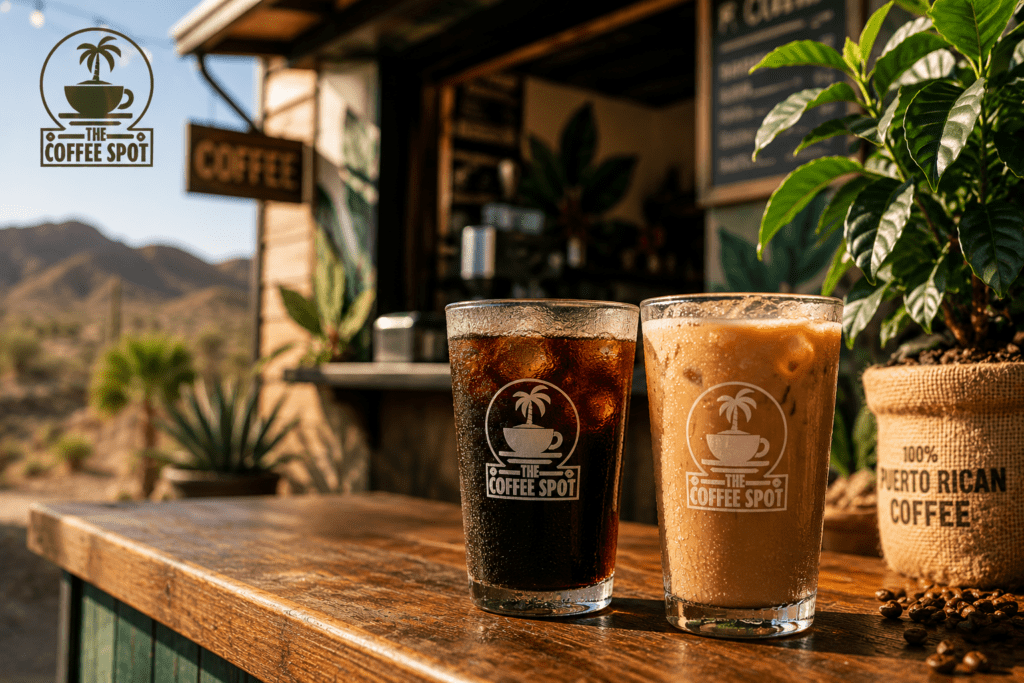
Iced Coffee vs Cold Brew El Paso: Which One Wins the Heat?
Iced Coffee vs Cold Brew El Paso: The Smooth, Low-Acid Answer
If you're weighing iced coffee vs cold brew in El Paso, the short version is this: cold brew is smoother and naturally lower in acidity, while iced coffee is brighter, faster to make, and a little more punchy. Both keep you cool when the Sun City hits triple digits. The right pick really comes down to your palate, your stomach, and how much time you've got. Let's break it down the way we would across the counter at our kiosk in The Shoppes at Solana.
Quick Answer: Iced Coffee vs Cold Brew in El Paso
Why the Brewing Method Changes Everything
The difference between these two drinks isn't the ice — it's the water temperature and the time. That single variable reshapes flavor, acidity, and even how strong the cup feels.
Iced coffee starts hot. We brew it like a normal cup, then pour it over ice. Heat extracts quickly, so you get those bright, aromatic, slightly tangy notes that hot coffee lovers crave. The trade-off is that hot extraction also pulls more acids into the cup.
Cold brew takes the slow road. Coarse grounds sit in cold or room-temperature water for 12 to 24 hours. Because there's no heat, the process skips many of the bitter, acidic compounds. The result is a rounder, sweeter, low-acid concentrate that you dilute with water or milk. For anyone sensitive to acidity, that's a meaningful difference.
Iced Coffee vs Cold Brew El Paso: At-a-Glance Comparison
Here's how the two stack up side by side, so you can pick your El Paso summer go-to in a glance.
| Feature | Iced Coffee | Cold Brew | What It Means for You |
|---|---|---|---|
| Brew time | 5–10 minutes | 12–24 hours | Iced coffee is the quick fix |
| Acidity | Higher, brighter | Notably lower | Cold brew is easier on the stomach |
| Caffeine | Moderate | Higher (concentrate) | Cold brew packs more of a kick |
| Flavor | Bright, lively, tangy | Smooth, sweet, mellow | Depends on your taste |
| Best for El Paso heat | Good | Great | Cold brew sips effortlessly all day |
Which Is Less Acidic — and Why El Paso Drinkers Care
Is cold brew less acidic than iced coffee? Yes — and the gap is real. Cold brew typically measures around pH 6.3, while hot-brewed coffee lands closer to 5.5, meaning cold brew can be roughly 60 to 70 percent lower in perceived acidity. For folks with sensitive stomachs or acid reflux, that smoother profile is the whole reason they switch.
This is also where the bean matters. Naturally low-acid coffee, like the Puerto Rican beans we import fresh to El Paso, starts the cup off gentler before brewing even begins. Pair a naturally low-acid bean with the cold-brew method and you get about the smoothest iced cup you can pour. According to the USDA's nutrient data on coffee, a brewed cup's profile shifts meaningfully with preparation, so temperature and time are not small details. The Specialty Coffee Association notes the same about extraction variables.
Caffeine: Is Cold Brew Stronger Than Iced Coffee?
People assume iced coffee and cold brew hit the same. They don't. Cold brew is brewed as a concentrate, so ounce for ounce before dilution it usually carries more caffeine than standard iced coffee.
That said, the final cup depends on how much water or milk you add. A heavily diluted cold brew can land right alongside a strong iced coffee. So if you want the bigger lift, ask for your cold brew with less dilution. Conversely, if you want something lighter for an all-day sipper, iced coffee or a watered-down cold brew is the move.
How to Order the Right One in El Paso
Choosing between these two is easier once you know your priorities. Use this quick guide next time you step up to the counter.
- Pick cold brew if you want low acidity, a smoother taste, and a stronger caffeine base for those long El Paso afternoons.
- Pick iced coffee if you love bright, classic coffee flavor and you want it made fast.
- Pick a low-acid bean either way if your stomach is sensitive — the bean choice matters as much as the brew method.
- Add milk or sweet cream to cold brew for a dessert-like finish that holds up against the heat.
The El Paso Heat Factor
When summer turns the Sun City into an oven, your coffee choice changes. Hot coffee loses its appeal fast, and even iced coffee can taste watery once the cubes melt in 100-degree weather.
Cold brew holds up better. Because it's a concentrate, it keeps its flavor longer as the ice melts, and its smooth, low-acid body just sips easier when you're overheated. Therefore, so many El Paso regulars switch to cold brew from May through September. Curious about how we source our beans?
About The Coffee Spot 915