
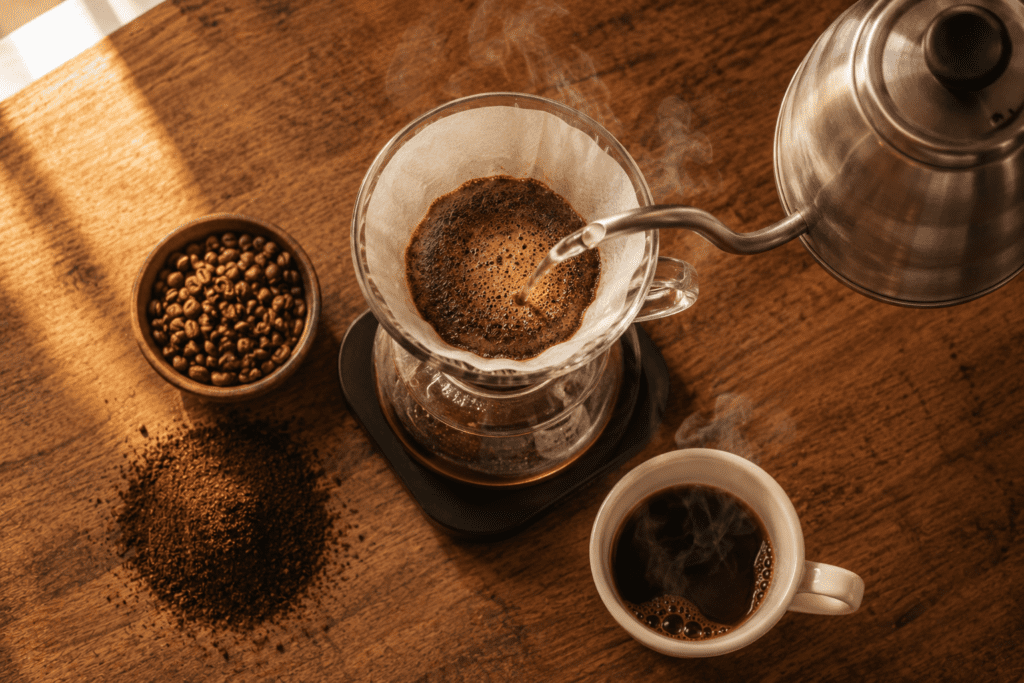
How to Brew Puerto Rican Coffee at Home
How to Brew Puerto Rican Coffee: The Quick Answer
Why Puerto Rican Coffee Brews Differently
Puerto Rican coffee is known for a smooth body, low acidity, and natural chocolate-caramel sweetness. Therefore, the goal is not to overpower the bean. The goal is to reveal what is already there.
Traditionally, Puerto Rican coffee is often brewed with a drip-style cloth filter called a colador. That gentle method says a lot. It shows that the coffee rewards patience, clean water, and steady extraction instead of aggressive heat or pressure.
At The Coffee Spot 915, we work with direct-import Puerto Rican beans every day. We grind them to order, pull espresso shots, brew fresh drinks, and help customers choose the right grind for home. In short, this guide is built for real kitchens, not just coffee textbooks.
Puerto Rican Coffee Brew Methods at a Glance
Use this table as your quick setup guide before you start brewing. Also, remember that fresh whole beans will improve every method.
| Brew Method | Grind Size | Water Temp | Brew Time | Best Result |
|---|---|---|---|---|
| Drip Machine | Medium | 195–205°F | 4–6 min | Easy daily cup |
| Pour-Over | Medium-fine | 200–205°F | 3–4 min | Clean flavor clarity |
| French Press | Coarse | 195–200°F | 4 min | Full body |
| Espresso | Fine | 195–205°F | 25–30 sec | Dense caramel sweetness |
| Moka Pot | Fine-medium | Near boiling | 5–7 min | Bold, rich cup |
| Cold Brew | Coarse | Cold or room temp | 12–24 hrs | Smooth iced coffee |
Before You Brew: Grind, Water, and Freshness
First, choose the correct grind size. Too fine can make the coffee taste bitter. Too coarse can make it taste thin. Because each brew method extracts differently, the grind should match the equipment.
Next, watch the water temperature. Boiling water can scorch the grounds and flatten the sweetness. For most hot brewing methods, aim for 195 to 205 degrees. If you do not use a thermometer, let the kettle rest for about 30 seconds after boiling.
Finally, protect freshness. Buy whole beans when possible, store them in an airtight container, and grind just before brewing. At The Coffee Spot 915, we grind to order because fresh grinding helps preserve the chocolate and caramel notes Puerto Rican coffee is known for.
Read the flavor guide →How to Brew Puerto Rican Coffee with Drip or Pour-Over
Drip machines and pour-over brewers are the easiest ways to start. They create a clean cup and let the natural sweetness come through without too much effort.
For a drip machine, use a medium grind and filtered water. Measure one to two tablespoons of coffee for every six ounces of water. Then, brew as usual and serve quickly. Coffee left on a warming plate can lose sweetness and turn flat.
For pour-over, use a medium-fine grind. Rinse the paper filter first, add the coffee, and bloom the grounds with a small pour of hot water for 30 seconds. After that, pour slowly in circles until the brew finishes in about three to four minutes.
How to Brew Puerto Rican Coffee with a French Press
French press brings out the fullest body in Puerto Rican coffee. Since there is no paper filter, the natural oils stay in the cup. As a result, the texture feels richer and the chocolate notes taste deeper.
Use a coarse grind, similar to coarse sea salt. Preheat the press with hot water, then pour that water out. Add the coffee, pour in water at 195 to 200 degrees, and stir gently so all grounds are saturated.
Place the lid on with the plunger raised and steep for four minutes. Then, press down slowly and pour immediately. If brewed coffee stays in contact with the grounds, it keeps extracting and can turn bitter.
Espresso and Moka Pot Methods for Puerto Rican Coffee
Espresso concentrates what Puerto Rican coffee does well. The caramel sweetness becomes stronger, the body feels dense, and the finish can stay smooth when the shot is pulled correctly.
For espresso, use a fine grind and dose 18 to 20 grams for a double shot. Tamp evenly, lock in the portafilter, and start the shot right away. Ideally, the extraction should take 25 to 30 seconds.
For a Moka pot, use a fine-medium grind and near-boiling water in the bottom chamber. Add coffee to the basket without tamping, then brew on medium-low heat. Remove it from heat when the stream turns light and sputtery, because that is when bitterness can start.
Cold Brew Puerto Rican Coffee at Home
Cold brew is one of the best ways to enjoy Puerto Rican coffee in El Paso. Since the grounds never touch hot water, the extraction stays gentle. Therefore, the cup tastes smooth, chocolatey, and naturally sweet.
Use a coarse grind and combine one cup of coffee with four cups of cold filtered water. Stir gently, cover the jar, and place it in the refrigerator. Steep for 12 hours for a lighter concentrate or 24 hours for a deeper one.
After steeping, strain the concentrate through a fine mesh strainer, cheesecloth, or paper filter. To serve, mix it with water or milk over ice. Start with a one-to-one ratio, then adjust to taste.
Which Brewing Method Is Best?
The best method depends on what you want from the cup. If you want clarity, choose pour-over. It highlights the chocolate, caramel, and praline-like notes with a clean finish.
If you want body, choose French press. It keeps more natural oils in the cup and creates a silkier texture. Meanwhile, espresso and Moka pot are better for stronger drinks, lattes, cortados, and café-style flavor at home.
For hot weather, cold brew is the easiest winner. Puerto Rican coffee’s low acidity makes it especially smooth over ice. Ultimately, the best way to learn how to brew puerto rican coffee is to try more than one method and compare the results.
How to Make Puerto Rican Coffee Taste Better
Start with whole beans and grind fresh. Pre-ground coffee loses aroma quickly, and those aromas carry much of the chocolate and caramel flavor. So, grinding right before brewing gives the cup more life.
Also, store beans correctly. Keep them in an airtight container away from light, heat, and moisture. Do not store them next to the stove. Also, avoid the freezer if the bag will be opened often, because moisture can hurt the flavor.
Finally, use filtered water. Strong chlorine or heavy minerals can compete with the coffee. Clean water lets the bean speak for itself, especially when you are brewing direct-import Puerto Rican coffee from The Coffee Spot 915.
See menu and beans →How to Choose the Right Grind at The Coffee Spot 915
When you buy beans at The Coffee Spot 915, tell the barista how you brew at home. That one detail helps us match the grind to your method, whether you use drip, pour-over, French press, espresso, Moka pot, or cold brew.
For example, French press and cold brew need a coarse grind. Drip machines need medium. Pour-over works best with medium-fine. Espresso needs fine, while Moka pot usually lands between fine and medium.
In short, you do not have to guess. We can grind to order at the kiosk, or you can take whole beans home for maximum freshness.
Find us at Solana →Frequently Asked Questions
Q1 What is the best way to learn how to brew puerto rican coffee? +
Q2 What grind size should I use for Puerto Rican coffee? +
Q3 Can I use Puerto Rican coffee in a regular drip coffee maker? +
Q4 How do I bring out chocolate and caramel notes? +
Q5 Where can I buy fresh Puerto Rican coffee beans in El Paso? +
Ready to Brew? Start With Better Beans
The best way to learn how to brew puerto rican coffee is to start with beans worth brewing. Technique matters, but freshness matters first. Visit The Coffee Spot 915 at The Shoppes at Solana for direct-import Puerto Rican coffee, whole beans, and grind-to-order help for your favorite brew method.