
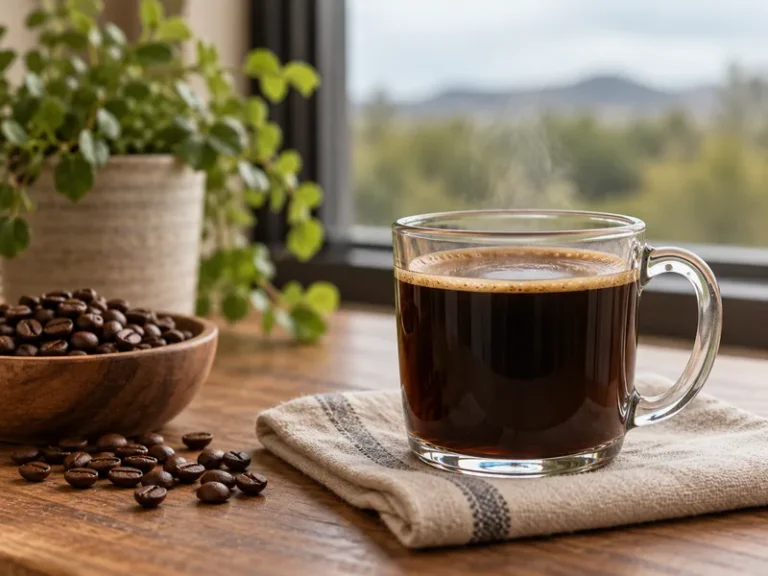
Low Acid Coffee El Paso: Why Puerto Rican Beans Sit Easier
If you have been hunting for low acid coffee El Paso can deliver, the bean matters more than the bag. Customers tell us they quit coffee years ago because it left them sour by mid-morning. Most of them never changed beans. They simply assumed coffee itself was the trouble. However, acidity is not one single thing. It starts in the soil, shifts with the roast, and shifts again in your kitchen. So there is usually a cup that works for you.
Low Acid Coffee El Paso: The Short Answer
Low Acid Coffee El Paso: What Acidity Actually Means
Acidity means two different things, and mixing them up causes most of the confusion. In coffee tasting, acidity describes brightness. It is the crisp, citrus-like snap at the front of a sip, and it is a flavor word. Stomach acidity is another matter entirely. It describes how a cup feels an hour later. A coffee can taste bright and still sit fine. Meanwhile, another can taste mellow and still bother you. So the goal here is a bean that behaves on both counts.
Three things set the baseline before you ever grind. First, chlorogenic acids, the compounds that give coffee much of its sharp edge. Second, altitude, which slows the cherry down and builds sugar. Third, soil, because mineral-rich volcanic ground feeds a rounder, fuller bean. The pattern is simple. Slow-grown beans in good soil tend to land smoother in the cup. Therefore origin does more work here than any brand name on a shelf.
So is Puerto Rican coffee acidic? Not especially, and the reason starts underground. Our beans come from El PuebloDel Café in Puerto Rico, and we roast them here in small batches. Island coffee grows on mountain slopes in volcanic soil. Specifically, that is the profile behind a full body and low acidity. For instance, the cup reads as chocolate and caramel rather than citrus. Here is more on where our beans are sourced.
Smooth Low Acidity Beans at a Glance
The table below describes our own coffee rather than anyone else's. Every row traces to the bean we buy, the roast we run, or the tasting language on our menu. Read it as a profile, not a ranking. In short, it shows what to expect from a cup before you order one.
| Trait | What it means | Where it comes from | What you notice |
|---|---|---|---|
| Perceived acidity | Low | Bean origin | Smooth finish |
| Body | Full | Yauco altitude | Rounder mouthfeel |
| Flavor notes | Chocolate, caramel | Volcanic soil | Natural sweetness |
| Roast level | Medium | Small batches | Less bitterness |
| Chlorogenic acids | Reduced | Roast development | Softer edge |
| Brew style | Cold brew | Cold steeping | Gentle finish |
Low Acid Coffee El Paso: Why Yauco Beans Sit Easier
Yauco sits in the mountains of southwestern Puerto Rico, where the soil is volcanic and the farms sit high. Two things there do the heavy lifting. First, elevation, because cherries ripen slowly in cool mountain air. Second, mineral-rich ground, which feeds the plant steadily. As a result, the roasted bean carries more body and less bite. Growers say the same thing in plainer words. Slow fruit makes sweet coffee.
You taste that as chocolate, caramel and a touch of praline. Notably, none of those are sharp flavors. Our menu describes Puerto Rican coffee as smooth in body with naturally low acidity, and that is exactly why it keeps coming up in this conversation. For example, customers who gave up on brighter beans often stay with ours. Here is a fuller guide to what Puerto Rican coffee tastes like.
How Roast Level Changes What Your Stomach Feels
Roast is the second lever, and it works in both directions. Longer roasting breaks down more of the chlorogenic acids behind a sharp, bright cup. The Specialty Coffee Association publishes the reference work on roast development. However, push a roast too far and you trade brightness for scorch. A burnt bean brings its own bitterness, and that harshness lands just as hard.
Therefore darker is not automatically gentler. Our own answer is a medium roast on a bean that started smooth. You lose the sharp edge without picking up an ashy finish. Admittedly, that is a narrower target than grabbing the darkest bag on a shelf. Strength sits apart from acidity too, and we unpacked that in is Puerto Rican coffee strong.
Grind Size, Water Temperature and Over-Extraction
Brewing can undo a good bean in about four minutes. Grind too fine and the water lingers, dragging out the bitter compounds that sit at the tail of extraction. Grind too coarse and the cup turns thin and sour instead. Thus the middle setting usually wins. For a drip basket, aim for the texture of coarse sand.
Water temperature does similar work. The National Coffee Association puts the brewing range between 195 and 205 degrees Fahrenheit, just off a boil. Above that, you scald the grounds and drag harshness along with them. Also, filtered water makes a real difference here. Hard tap water flattens sweetness and sharpens everything else.
Brew time closes the loop. Specifically, a drip cycle that runs long keeps pulling after the sweetness is gone. Therefore, watch the clock as closely as you watch the grinder. For instance, about four minutes of contact suits most drip baskets. In short, a pour-over wants even less than that.
Cold Brew or Hot Brew for a Sensitive Stomach
Cold brew is the easiest single change on this list. Steeping grounds in cold water for many hours pulls far fewer of the compounds behind a sharp taste. As a result, the same bean reads noticeably smoother over ice than it does hot. Nothing about the bean changed. Only the water did.
Hot brew still has a place, especially once El Paso mornings cool off in September. Meanwhile, if a hot cup bothers you week after week, cold brew deserves a two-week trial before you quit coffee entirely. Ultimately, many of our regulars land on one hot order and one cold one.
Cold brew in El Paso →Low Acid Coffee El Paso: How to Drink It Without the Burn
The habits around the cup matter as much as the cup itself. First, eat something before coffee. On an empty stomach, a mellow brew still hits harder than it should. Second, slow down, because a cup sipped over twenty minutes lands softer than one drained in three. Third, keep a glass of water beside it.
Timing helps too. Late-day coffee stays with you longer, so an afternoon cutoff is often the simplest fix of all. There is no single best coffee for acid reflux, though the pattern holds steady. For broader diet guidance, the National Institute of Diabetes and Digestive and Kidney Diseases publishes material on reflux worth reading. If symptoms persist regardless of the bean, that is worth raising with a doctor.
What to Order and What to Take Home
Here is how all of that translates at our counter. Pick by how much the sharpness bothers you, not by what sounds strongest on the board.
- Start with cold brew. It is the gentlest thing we pour, and it asks nothing of you.
- Try a cortado next. Small, milk-softened, built on the same medium roast. A cappuccino runs $4.00 if you want more foam.
- Skip the empty-stomach shot. An espresso shot runs $2.00 and it is a fine drink, though not as breakfast.
- Ask for the medium roast. That is our default, and it sits between sharp and scorched.
- Take a bag home. Whole bean, ground fresh, brewed with filtered water at your own pace.
Naturally, the bag is where this pays off most. At home you control grind, water and timing, and that is where harshness usually creeps in. To start there, here is where to buy Puerto Rican coffee beans.
How to brew Puerto Rican coffee →Frequently Asked Questions
Q1 What is low acid coffee El Paso drinkers should look for? +
Q2 Is Puerto Rican coffee low in acid? +
Q3 Does dark roast have less acid than light roast? +
Q4 Is cold brew less acidic than hot coffee? +
Q5 What is the best way to drink coffee if I have acid reflux? +
Come Taste a Cup That Sits Easier
Nobody should have to give up coffee to feel fine afterward. If low acid coffee El Paso can pour you daily is the goal, our kiosk sits at The Shoppes at Solana, in front of the white horse statue. So come try a cold brew, or skip the line and order on DoorDash.