
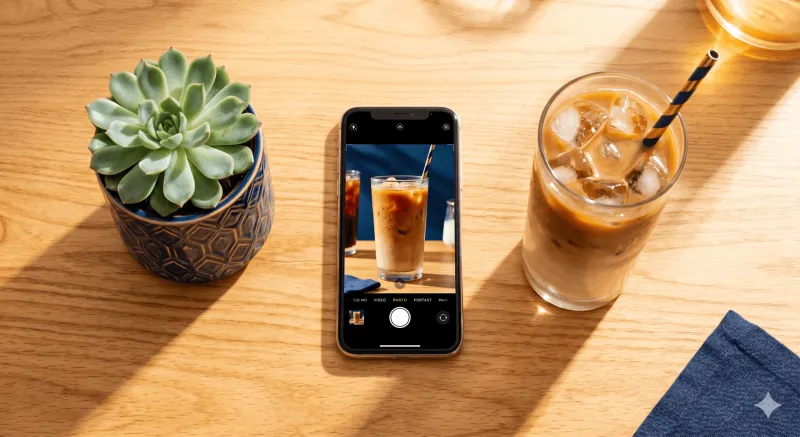
How to Win a Photo Contest With Your Phone: Simple Tips That Make Judges Stop Scrolling
You do not need a professional camera to win a photo contest. You do not need Photoshop, a tripod, or a studio. The phone in your pocket right now — the same one you use to text, scroll, and take selfies — is more than enough. Most photo contests today are entered and won on smartphones. The technology in a modern phone camera rivals what professionals were shooting with ten years ago. What separates a winning photo from the thousands that get scrolled past is not equipment. It is intention.
Judges reviewing photo contest entries are not sitting in a gallery with a magnifying glass. They are scrolling. They are looking at hundreds, sometimes thousands, of submissions — and making split-second decisions about which ones deserve a closer look. Your job is to create a photo that makes someone stop mid-scroll and feel something. That is it. And you can absolutely do that with your phone if you know what to focus on.
| What Wins | What Gets Skipped |
|---|---|
| Creative angles and unexpected perspectives | Generic straight-on selfies with no thought behind them |
| Natural light that flatters the subject | Harsh flash or blown-out overhead lighting |
| Clean composition with a clear focal point | Cluttered backgrounds that compete with the subject |
| A photo that tells a story or captures a mood | A technically fine image that says nothing |
| Following the contest rules and judging criteria | Ignoring the theme, format, or submission guidelines |
| Subtle, natural editing that enhances the image | Over-filtered photos that look artificial |
| Multiple entries that show experimentation | One rushed submission with no follow-up |
The best photo contest entry is not the one taken with the best camera. It is the one taken with the most intention. Read the rules. Chase the light. Compose with purpose. Tell a story. Edit with a light hand. And enter more than once. Your phone is ready. Follow @thecoffeespot915 on Instagram and check out the Sip, Snap & Win Photo Contest if you want to put these tips into action right now in El Paso.
Read the Rules Before You Shoot
This is the tip that most people skip — and it is the one that gives you the biggest advantage. Every photo contest publishes its rules and judging criteria. Those criteria are your scorecard. If you shoot without reading them, you are guessing. If you read them first and build your photo around what judges are actually looking for, you are competing with a plan.
Start with the basics. What is the theme? What are the specific judging categories and their weights? What format does the submission need to be in? Is there a deadline? Are there restrictions on editing or content? Every answer shapes the photo you should be taking.
For example, if a contest scores 40 percent on creativity, that tells you judges want something they have not seen before. A standard pose will not cut it. If relevance to a specific subject counts for 30 percent, your photo needs to clearly feature that subject — not just hint at it in the background. If visual appeal and local flavor make up the remaining 30 percent, you need to think about setting, color, and sense of place.
When you know the scorecard, you stop shooting randomly and start creating strategically. That is the difference between entering a contest and competing in one.
Use Natural Light Like a Professional
Light is the single most important element in any photograph. Good light can make a phone photo look like it belongs in a magazine. Bad light can ruin even the most creative idea. The good news is that the best light for photography is free and available every day.
Shoot near windows. Indoor natural light that comes through a window creates soft, directional illumination that flatters nearly every subject. Position what you are photographing so the light falls on the front or side — not directly behind it.
Avoid harsh flash. The built-in flash on your phone produces flat, unflattering light that washes out colors and creates hard shadows. Turn it off. If you need more light, move closer to a window or step outside.
Golden hour is your best friend. The hour after sunrise and the hour before sunset produce warm, soft light that makes everything look better. Colors are richer. Shadows are longer and more dramatic. Skin tones glow. If you can time your photo to golden hour, you are already ahead of most entries.
Use bounce light. If you are indoors and the light is too directional, place a white napkin, a sheet of paper, or any light-colored surface opposite the window. It will bounce soft light back onto your subject and fill in shadows. Professional photographers use reflectors for this same reason — you can do it with what is on the table.
Watch for mixed lighting. If you are in a space with both natural light and fluorescent or incandescent bulbs, the color temperature will clash and your photo will look off. Stick to one light source when possible.
Composition Tricks That Separate Winners From Everyone Else
Composition is how you arrange everything inside the frame. It is the difference between a photo that feels intentional and one that feels like it happened by accident. You do not need to study art theory. You just need a few techniques that work every time.
Rule of thirds. Imagine a tic-tac-toe grid over your screen. Most phones let you turn this grid on in camera settings. Place your main subject at one of the four points where the lines intersect — not dead center. This creates visual tension and makes the photo more dynamic.
Leading lines. Use natural lines in the environment — a countertop, a table edge, a row of tiles, a window frame — to guide the viewer’s eye toward your subject. Leading lines add depth and pull attention exactly where you want it.
Negative space. Leave empty space around your subject. It sounds counterintuitive, but giving your subject room to breathe makes it feel more important. A coffee cup surrounded by clean, open counter space draws the eye faster than one crammed into a busy background.
Change your angle. The most common mistake in phone photography is shooting everything from eye level while standing straight up. Get low. Shoot from above. Tilt the phone. Put the camera at table level and shoot across the surface. A change in perspective makes an ordinary subject look extraordinary.
Fill the frame. If your subject is small — a drink, a pastry, a detail — get close. Fill the entire frame with it. Eliminate distractions. Let the viewer see texture, color, and detail they would miss from farther away.
Tell a Story in a Single Frame
Technical skill gets a photo noticed. Storytelling gets it remembered. The best contest photos say something. They capture a moment, a mood, or a feeling that the viewer connects with — even if they have never been to the place in the photo.
Think about what you want someone to feel when they see your image. Joy. Nostalgia. Curiosity. Warmth. Energy. Then build the photo around that feeling. A coffee cup sitting on a counter is a snapshot. A coffee cup catching afternoon sunlight while a friend laughs in the background and the desert is visible through the window — that is a story.
Include context. Show where you are. Show what is happening around you. Let the environment add meaning to the subject. A photo that feels rooted in a specific place and moment will always outperform one that could have been taken anywhere.
Capture candid moments. Posed photos look posed. Judges can tell. Instead of setting everything up perfectly and standing stiffly, capture the in-between moments — reaching for the cup, mid-laugh, the first sip. Those are the frames that feel real.
Use human elements. Hands holding a drink, a friend in the background, someone walking past — people add life and relatability to a photo. You do not need to show faces. A hand, a gesture, a silhouette can do the work.
Edit Smart — Do Not Over-Edit
Editing can take a good photo and make it great. But it can also take a good photo and make it look fake. The goal is enhancement, not transformation. Judges prefer authenticity. If a photo looks like it was run through five Instagram filters, it loses credibility — no matter how strong the composition is.
Use free apps. Lightroom Mobile, Snapseed, and VSCO are all free and powerful enough to handle everything you need. They give you control over brightness, contrast, warmth, shadows, highlights, and cropping without forcing you into preset filters.
Adjust brightness and contrast. A slight increase in brightness opens up shadows. A subtle contrast boost adds depth. Do not push either slider so far that the photo looks unnatural.
Warm it up. A slight warmth adjustment makes photos feel inviting and golden. This is especially effective for food, drinks, and lifestyle shots.
Straighten and crop. A crooked horizon is one of the fastest ways to make a photo look amateur. Use the straighten tool. Then crop to tighten the composition — remove anything at the edges that does not serve the image.
The test: If you look at the final photo and cannot immediately tell it was edited, you did it right. If the first thing someone notices is the editing, you went too far.
Enter More Than Once and Experiment
Most photo contests allow multiple entries over the contest period. This is not a one-shot situation. It is an opportunity to experiment, improve, and submit your best work over time.
Do not submit one photo on day one and wait. Try different times of day. Shoot in morning light and then again in the afternoon. Try different compositions — overhead one day, eye-level the next. Bring a friend one visit and go solo the next. Each entry is a chance to apply something new from what you have learned.
Your best photo might come on your fifteenth attempt. The first few entries are practice. The later ones are where the magic happens — because by then you have learned the space, figured out the light, and dialed in your style.
Keep every photo you take, even the ones you do not submit. Review them later with fresh eyes. Sometimes a photo you dismissed on the spot looks completely different after a day or two. That second look might reveal your strongest entry.
Put These Tips to Work — The Sip, Snap & Win Photo Contest
Everything in this guide applies directly to a contest happening right now in El Paso.
The Coffee Spot is running the Sip, Snap & Win Photo Contest from April 15 through approximately May 10, 2026. It is a skill-based judged contest with three scoring categories that map perfectly to what we just covered:
Creativity and originality (40%) — This is your composition, your angle, your storytelling. Use the rule of thirds, change your perspective, capture a candid moment. Give judges something they have not seen.
Relevance to the featured specialty drinks and The Coffee Spot experience (30%) — This is reading the rules and shooting with the scorecard. Make the drinks the star. Show the shop. Make it clear where you are and what you are featuring.
Visual appeal and El Paso flavor (30%) — This is natural light, warm tones, and sense of place. Capture the desert light coming through the window. Show the colorful Puerto Rican-inspired décor. Let El Paso’s west side energy come through in the frame.
The grand prize is a premium VIP package for two to Post Malone Presents: The BIG ASS Stadium Tour Part 2 at Sun Bowl Stadium on May 13, 2026. Two runner-up winners each receive a pair of BTS WORLD TOUR ‘ARIRANG’ tickets at Sun Bowl Stadium on May 2 or May 3. No purchase is necessary to enter. You can submit one entry per person per day.
Full contest details, rules, and entry paths are in our complete guide: Win Free Concert Tickets in El Paso 2026 — All It Takes Is a Photo and a Coffee.
Frequently Asked Questions Why Local Coffee Shops in El Paso Are Replacing Big Chains
Do I need a professional camera to win a photo contest?
No. Most contests today are entered and won with smartphone cameras. Judges evaluate creativity, composition, and storytelling — not equipment. A phone photo with strong light and a clear story will beat a technically perfect but boring DSLR shot every time.
What makes a photo contest photo stand out?
Creativity, emotion, and intentional composition. Judges scroll through hundreds or thousands of entries. The photos that win are the ones that make someone stop and feel something — surprise, warmth, curiosity, or joy.
How do judges score entries?
Every contest has its own criteria. Read the official rules before you shoot. Common scoring categories include creativity, relevance to the theme, technical quality, and visual impact. Knowing the weights helps you prioritize what matters most.
What are the most common mistakes in photo contests?
Ignoring the rules and theme. Using harsh flash instead of natural light. Submitting cluttered or poorly composed images. Over-editing with heavy filters. Entering only once instead of submitting multiple times over the contest period.
Can I edit my photos before submitting?
Most contests allow basic editing — brightness, contrast, cropping, color adjustments. Avoid heavy filters or manipulations that alter the reality of the image. When in doubt, keep it subtle and natural.
How many times can I enter?
It depends on the contest. Many allow one entry per day over the contest period. Take advantage of this. Each entry is a chance to try something different and submit a stronger photo.